Curaçao & Aruba Homeschool Cruise 2027
Dutch History: Curaçao & Aruba Homeschool Cruise 2027
Discover the Dutch Caribbean through colorful architecture, island languages, and meaningful history conversations—all while sharing a Southern Caribbean adventure with other homeschool families.
October 28, 2026 · 4 min read · By Shannon Springob
Ready to start planning? Get a free, personal quote in 24 hours.
Request a quote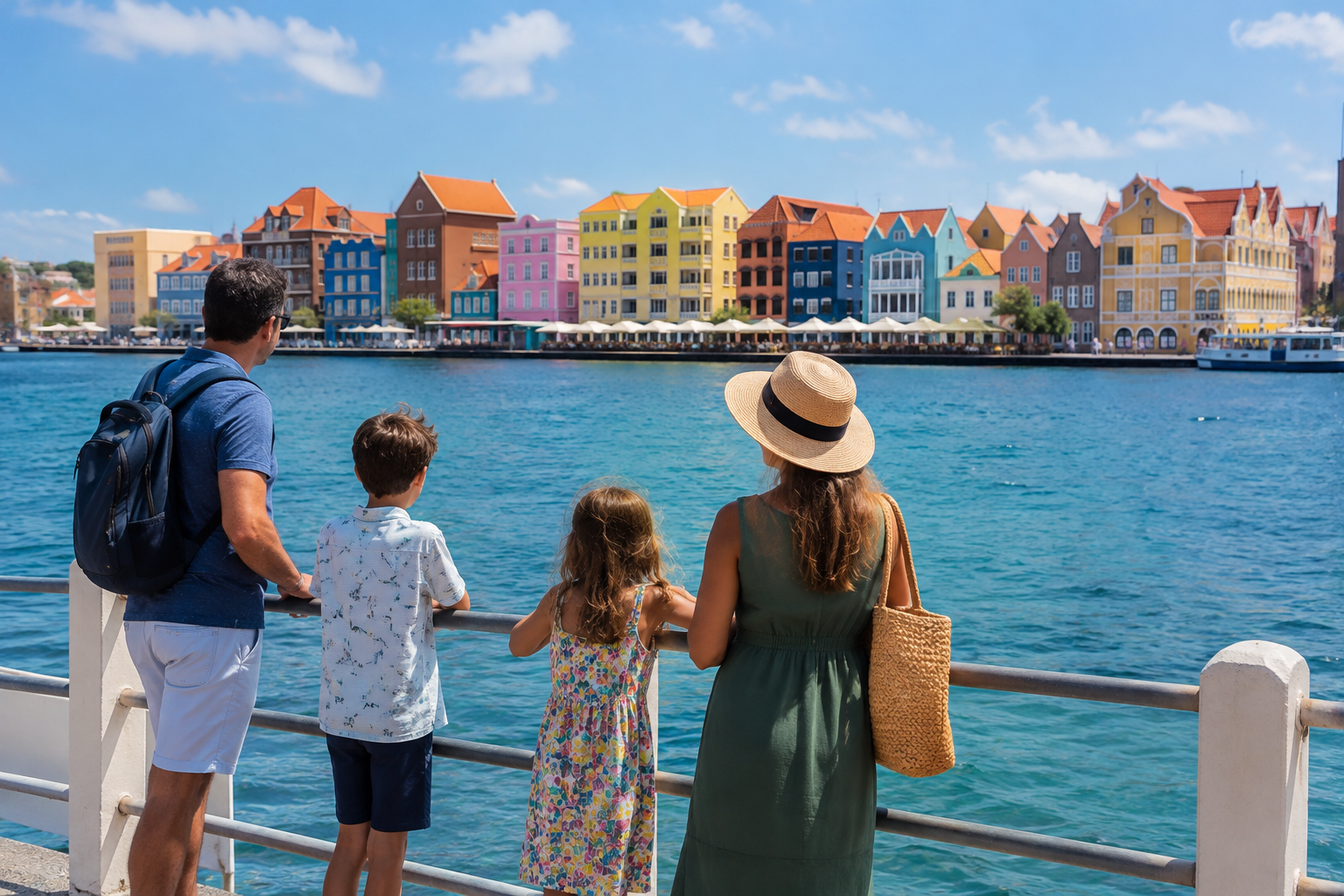
Discover History on the Curaçao & Aruba Homeschool Cruise 2027
The Curaçao & Aruba Homeschool Cruise 2027 brings a fascinating history topic into a Southern Caribbean adventure: how two Caribbean islands became connected to the Netherlands while keeping identities of their own. For homeschool families, that opens the door to geography, language, architecture, and thoughtful conversations about the past. It also offers a shared reason to explore with other families who enjoy following a child's curiosity.
Curaçao and Aruba are both part of the Kingdom of the Netherlands. Yet neither is simply a tropical version of Europe. Their cultures reflect Indigenous roots, African heritage, European colonization, and connections with nearby Latin America. Looking for those overlapping influences can turn an ordinary observation into a memorable learning moment.
You do not need to build a full unit study before traveling. Start with one question: What makes a place's history visible today? Your children might find answers in a building, a spoken greeting, or a map.
Two Caribbean Islands, One Kingdom Connection
Before exploring the Dutch connection, find the islands on a map. Curaçao and Aruba lie in the southern Caribbean, near the northern coast of South America. Then locate the Netherlands in Europe. That distance makes a useful starting point for discussing ocean travel, trade, and the expansion of European colonial power.
Today, Curaçao and Aruba are separate constituent countries within the Kingdom of the Netherlands. In plain English, they belong to the same kingdom, but they are not simply towns or provinces of the European Netherlands. They have their own governments for many domestic matters. Older learners can investigate the difference between a country, a kingdom, and a colony.
For younger children, keep the comparison concrete: two places can share a political connection without sharing the same weather, landscape, or everyday traditions. Ask them to sketch the islands and the Netherlands, then add questions they would like to answer. A curiosity map can be more inviting than a worksheet.
Look Beyond the Colorful Buildings
Curaçao's capital, Willemstad, is known for its colorful historic waterfront architecture. Its historic area is a UNESCO World Heritage Site, recognized for an urban landscape shaped by European planning and Caribbean influences. Studying photographs before the trip gives children a visual reference without assuming that any particular sightseeing stop is included.
Look at rooflines, windows, and building shapes. Which details resemble pictures of Dutch towns? Which seem suited to a tropical setting? Architecture provides a friendly way to introduce a bigger idea: people bring familiar designs with them, then adapt those designs to a different place.
There is also a serious history behind the attractive streets. Dutch colonial activity in the Caribbean included slavery, and Curaçao played a significant role in the transatlantic slave trade. Age-appropriate learning should recognize enslaved people's humanity, resistance, and lasting cultural contributions. Alongside stories about buildings and trade, ask whose work supported colonial society and whose voices historical accounts have overlooked.
Ready to start planning? Get a free, personal quote in 24 hours.
Request a quoteLet Island Languages Spark Your Learning
Language offers another window into Dutch Caribbean history. Papiamento, Dutch, English, and Spanish are spoken on these islands, though individual language use varies. You may also encounter the name Papiamentu in Curaçao, while Papiamento is used in Aruba. Those differences are a reminder that neighboring islands have distinct traditions.
Papiamento and Papiamentu are closely related creole language varieties. Their histories reflect contact among peoples and languages over generations. Rather than treating them as a novelty or simply a mixture of other languages, help children recognize them as living languages with their own grammar, literature, and cultural importance.
- Before traveling, listen to a reliable island-language recording and practice a greeting.
- Keep a small notebook for words noticed in signs or conversations.
- Compare the languages used on a map, a public sign, or a museum website.
- Ask older learners how migration and trade can shape language.
- Encourage polite curiosity without expecting every person to speak every language.
Share the Discoveries With Other Homeschool Families
One reason to join a homeschool group cruise is the chance to share discoveries with families who understand that learning does not always follow a lesson plan. One child notices a roofline; another wonders about a word. Those small observations can become conversations that make the destination more meaningful for everyone.
Keep your own learning plans light. Each child could choose a theme—buildings, languages, maps, or local history—and collect a few notes or sketches. Leave room for different ages and interests. A younger child might draw a favorite detail, while a teen explores how colonial history relates to present-day identity.
Freedom to Explore Travel's 2027 Southern Caribbean homeschool group cruise visits Curaçao and Aruba, giving your family a shared adventure to look forward to. Explore the trip page for the published details, and start imagining the questions, discoveries, and connections your family could bring home.
See the Trip Details
Dates, pricing, and booking details are on our Curaçao & Aruba cruise page. Head there to claim your spot.
Go to the Curaçao & Aruba cruise pageReady when you are.
Tell me what you're thinking and I'll send back ideas, pricing, and the right cruise for how you actually travel.
Keep reading
Alaska Homeschool Cruise 2028: Start Exploring Seattle
Make Seattle part of your family’s Alaska adventure. Explore simple ways to turn time before the cruise into waterfront discoveries, local history, and a relaxed start to traveling together.
How to Book a Group Cruise: A Step-by-Step Guide for First-Timers
From picking your people to locking in group rates and coordinating payments, here's the no-stress way to book a group cruise — even if you've never done it before.