Alaska Homeschool Cruise 2028
Nature Journaling: Alaska Homeschool Cruise 2028
A notebook, a pencil, and a little curiosity can turn an Alaska sailing into a personal field study. Discover simple nature journaling ideas for your homeschool family.
November 4, 2026 · 4 min read · By Shannon Springob
Ready to start planning? Get a free, personal quote in 24 hours.
Request a quote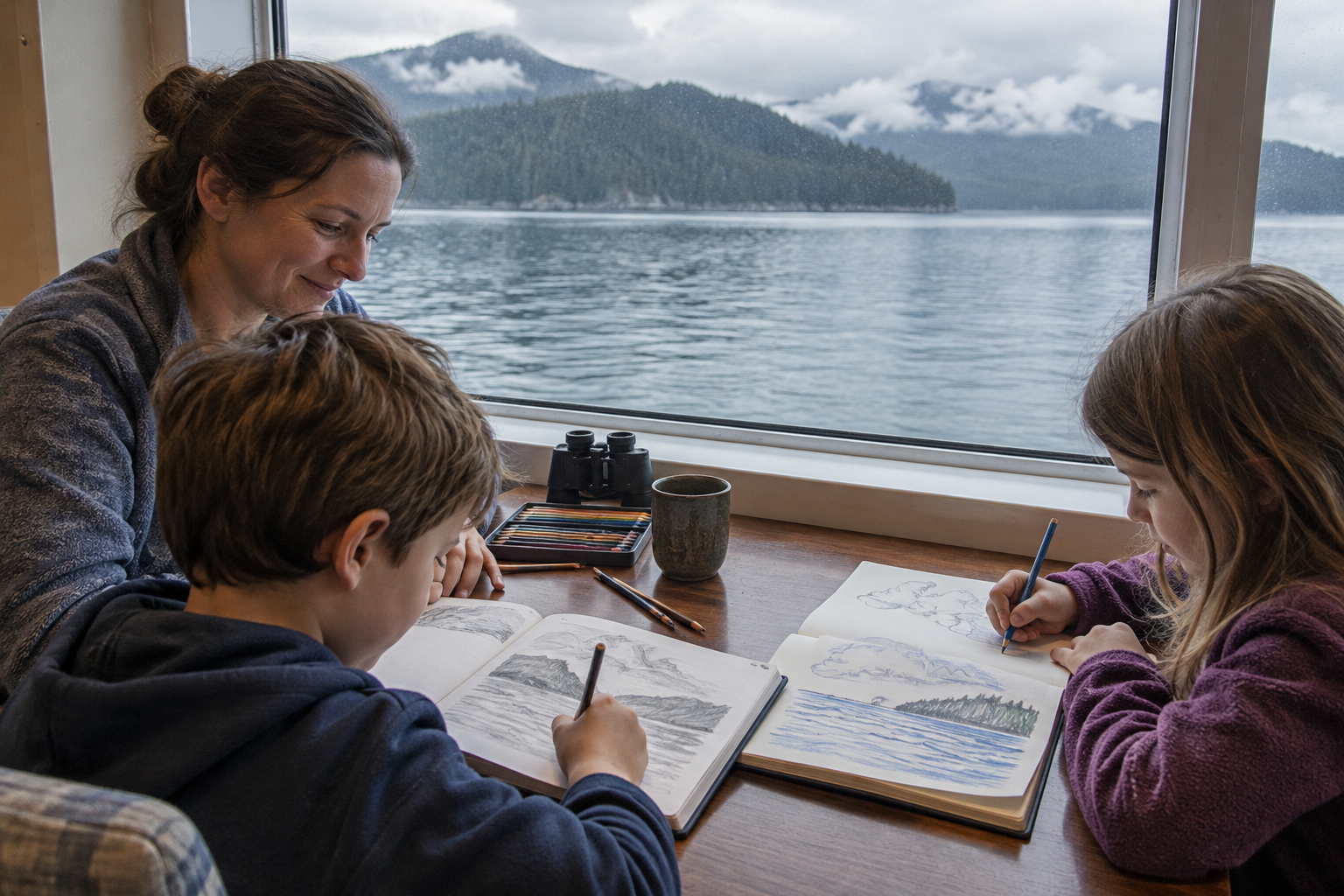
A Fresh Look at the Alaska Homeschool Cruise 2028
The Alaska Homeschool Cruise 2028 gives your family a wonderful reason to slow down and notice the natural world together. Sailing May 8–15, 2028, this seven-night trip aboard MSC Poesia travels round trip from Seattle, Washington. It is an Alaska sailing designed for homeschool families traveling together—and a nature journal can help children turn passing observations into lasting memories.
Nature journaling is simply recording what you notice outdoors or through a window. Children can draw, write, count, ask questions, or dictate their thoughts to a parent. There is no need for polished artwork or a perfectly identified bird. A page that says “gray sky, rippled water, three birds” is already a meaningful beginning.
These are flexible ideas for your family to try, rather than a scheduled onboard program. Think of the journal as an invitation to explore, not another assignment to finish. A few attentive minutes can be enough.
Let Water, Weather, and Light Lead the Lesson
An ocean view offers plenty to investigate, even when no wildlife is visible. Wind helps create surface waves, and changing light can make the same stretch of water appear silver, blue, or nearly black. Ask children to separate what they observe from what they think explains it: “The water looks darker” is an observation; “A cloud may be blocking the sun” is a possible explanation.
Alaska also introduces a fascinating geography connection. In May, daylight is increasing across the Northern Hemisphere, and places farther north generally have longer days than places farther south. Your family can explore that pattern with a globe and compare it with your home location, without needing to stay awake for every sunrise or sunset.
Clouds make excellent journal subjects because they change shape and position. Sketch the sky, add a few words about visibility, and return later if convenient. Was the horizon clearer? Did the cloud cover become thicker? Those small comparisons practice the same careful attention used in scientific fieldwork.
Start With a Simple Nature Journal Routine
Keep supplies uncomplicated: a notebook, a pencil, and a few colored pencils are enough. Choose a comfortable, permitted observation spot, supervise children, and follow shipboard guidance. A view through a window works well when outdoor conditions are not suitable.
Begin each entry with the date and a general setting, such as “looking out at the water.” Then let your child choose one small subject. These prompts can help a blank page feel more welcoming:
- I notice: Record three details about color, shape, movement, or sound.
- I wonder: Write one question you would like to investigate later.
- It reminds me of: Connect something new with a familiar place or experience.
- Look again: Sketch the same subject twice and note what changed.
- Count carefully: Tally visible birds or cloud patches during a short observation period.
Avoid turning a tally into a claim about how many animals live in an area. It records only what your child could see at that moment. That distinction is a useful lesson in how evidence works—and why scientists keep notes about observation conditions.
Ready to start planning? Get a free, personal quote in 24 hours.
Request a quoteMake Room for Every Age and Shared Discovery
One of the lovely reasons to travel with other homeschool families is the possibility of seeing the same scene through different eyes. One child may notice a bird’s movement while another studies the clouds. If you meet families who enjoy journaling, an informal exchange of observations can spark questions that nobody would have thought of alone.
Younger children might fill a page with color patches or tell a parent a single sentence. Elementary-age learners can add labels, comparisons, and simple tallies. Older students can distinguish observations from inferences, research identification clues, or explore how latitude affects daylight. Everyone can investigate the same view without completing the same task.
Keep sharing encouraging rather than competitive. Ask “What caught your attention?” instead of choosing the best drawing. Traveling together offers opportunities for connection, but your journal can stay private whenever your child prefers. The goal is curiosity, not performance.
Bring Home Questions Worth Exploring
Wildlife sightings are never guaranteed, and a satisfying journal does not depend on them. If animals are visible, observe without disturbing them and follow applicable guidance. Record features you can actually see rather than guessing a species. “Dark bird with narrow wings” gives you something useful to research later.
After returning home, invite each child to choose a favorite page and an unanswered question. Use library books or reliable natural history resources to investigate. Add new information beside the original entry rather than erasing it; seeing how an idea develops is part of learning.
For families who enjoy learning through experience, this sailing combines an Alaska adventure with the opportunity to travel alongside other homeschoolers. Explore the Alaska Homeschool Cruise 2028 trip page with Freedom to Explore Travel to learn more. Your family’s next field notebook could begin with one simple question: “What do you notice?”
See the Trip Details
Dates, pricing, and booking details are on our Homeschool Trips page. Head there to claim your spot.
Go to the Homeschool Trips pageReady when you are.
Tell me what you're thinking and I'll send back ideas, pricing, and the right cruise for how you actually travel.
Keep reading
Spain Homeschool Cruise 2027: Picasso and Art Adventures
Discover how Picasso, Barcelona, and a sketchbook can turn a homeschool cruise from Spain into an art adventure—with plenty of inspiration for the Atlantic crossing.
Wildlife on the Curaçao & Aruba Homeschool Cruise 2027
Flamingos are just the beginning. Discover how island birds, lizards, and coastal habitats can spark curiosity—and why exploring alongside other homeschool families makes the adventure meaningful.
How to Book a Group Cruise: A Step-by-Step Guide for First-Timers
From picking your people to locking in group rates and coordinating payments, here's the no-stress way to book a group cruise — even if you've never done it before.