Spain Transatlantic Homeschool Cruise 2027
Spain Transatlantic Homeschool Cruise 2027: Time Zones
What happens when your classroom crosses time zones? Discover how Spain, an Atlantic crossing, and a group of fellow homeschool families can turn changing clocks into memorable learning.
October 29, 2026 · 4 min read · By Shannon Springob
Ready to start planning? Get a free, personal quote in 24 hours.
Request a quote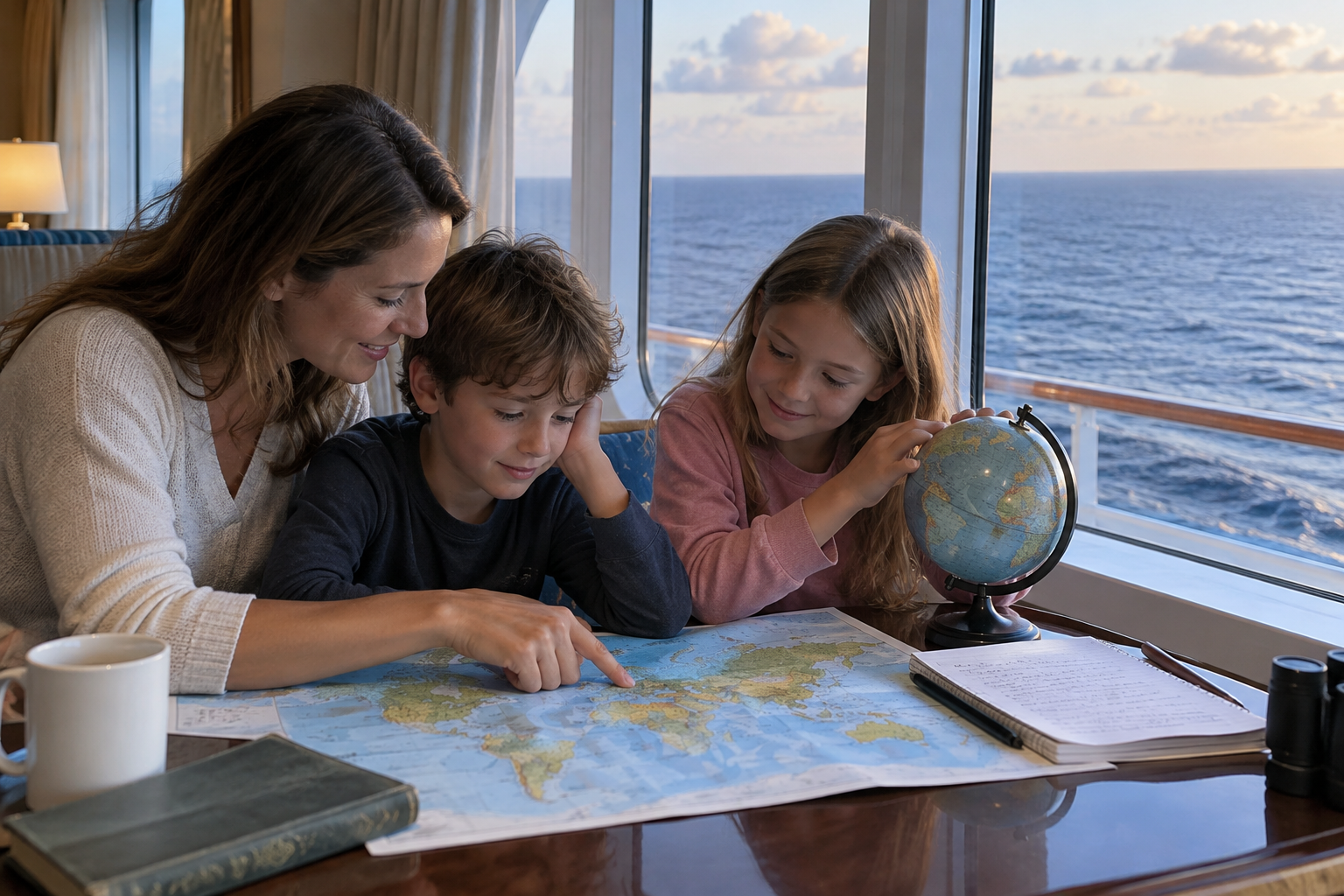
Spain Transatlantic Homeschool Cruise 2027: Learning in Motion
- The Spain Transatlantic Homeschool Cruise 2027 offers a wonderful reason to explore a question children often ask: why is it a different time somewhere else? This homeschool group cruise crosses the Atlantic from Spain aboard Royal Caribbean’s Legend of the Seas, with Barcelona and Spanish ports before the long ocean crossing.
- Time zones connect geography, math, astronomy, and everyday family life. Instead of only drawing lines on a worksheet, children can follow their journey across a map and notice how keeping track of time becomes part of traveling together.
- Joining the Freedom to Explore Travel group gives your family a shared travel experience with other homeschool families. A question over breakfast could become a conversation with another curious traveler, while comparing observations offers an easy way to get acquainted.
- There is no need to turn the whole trip into schoolwork. A notebook, a world map, and a few thoughtful questions can be enough. The goal is to make room for discovery while enjoying Spain and the experience of crossing an ocean.
Start in Spain: What Does Noon Really Mean?
- Barcelona provides a starting point for thinking about location and time. Find the city on a globe, then locate your hometown. Ask your children which place lies farther east and how that might affect when each place sees daylight.
- Barcelona and mainland Spain use Central European Time in winter and Central European Summer Time during daylight saving time. However, time zones are not simply tidy strips on a globe. Governments choose their clock rules, so political boundaries and history matter too.
- One surprising discovery: twelve o’clock on a watch does not always match solar noon, when the sun reaches its highest point in the sky that day. Longitude, daylight saving time, and the chosen time zone all influence the difference.
- Before leaving home, compare Barcelona’s current local time with your own using a reliable world clock. Repeat the comparison close to your departure, because seasonal clock changes can affect the difference. Let children explain what they notice in their own words.
Across the Atlantic: Why the Clocks Change
- Earth rotates once in roughly twenty-four hours, bringing different places into sunlight as it turns. Divide a full circle of 360 degrees by twenty-four, and you get fifteen degrees per hour. That is a useful starting model for understanding time zones.
- On a westbound journey, local clocks generally move earlier as travelers head toward places where the sun rises later relative to their starting location. Setting a clock back changes its label for the moment; it does not slow Earth’s rotation.
- The ship’s actual clock-change instructions depend on its operating plan. Do not assume there will be a change every day or that every adjustment will happen at the same hour. Follow onboard announcements and the ship’s stated time.
- A long Atlantic crossing gives families space to revisit the idea gradually. Younger children might practice reading an analog clock, while older learners explore longitude or calculate time differences. Everyone can investigate the same question at a different level.
Ready to start planning? Get a free, personal quote in 24 hours.
Request a quoteEasy Time-Zone Activities for Curious Kids
- Keep a two-clock journal. Record the ship’s stated time and the corresponding time at home, checking a reliable reference when available. Add a sentence about what your family is doing and what friends back home might be doing.
- Try a globe-and-flashlight demonstration. The flashlight represents the sun, and the globe represents Earth. Slowly rotate the globe to show places entering daylight. This simple model helps explain why the whole planet cannot share the same sunrise.
- Create a pretend family call. Choose a time at home, then calculate the corresponding time using your current time difference. Would everyone be awake? This turns subtraction and addition into a practical puzzle with a familiar purpose.
- Invite another family to compare answers or swap questions, if they would enjoy it. Older children can explain their reasoning, and younger children can draw daytime and nighttime scenes. These informal exchanges can make learning feel like part of the adventure.
Stay Comfortable and Enjoy the Shared Journey
- Keep one dependable reference for ship time and check it against official onboard information. Phones and watches may update automatically or stay on a previous setting. Confirm their displays rather than assuming every device agrees, especially when following onboard arrangements.
- Keep familiar bedtime routines where practical, and notice how each child responds to changing clocks. Daylight, meals, and rest can help provide a sense of routine. Leave room for quieter moments rather than expecting everyone to adjust identically.
- The group experience is about more than finding someone who enjoys the same subjects. Traveling alongside other homeschool families creates opportunities to share discoveries, compare perspectives, and connect through the ordinary moments that make a family journey memorable.
- From locating Barcelona on a globe to understanding a clock adjustment at sea, this crossing offers learning rooted in real experience. Explore the Freedom to Explore Travel trip page for confirmed details about the Spain Transatlantic Homeschool Cruise 2027 and how to join the group.
See the Trip Details
Dates, pricing, and booking details are on our Spain transatlantic cruise page. Head there to claim your spot.
Go to the Spain transatlantic cruise pageReady when you are.
Tell me what you're thinking and I'll send back ideas, pricing, and the right cruise for how you actually travel.
Keep reading
Dutch History: Curaçao & Aruba Homeschool Cruise 2027
Discover the Dutch Caribbean through colorful architecture, island languages, and meaningful history conversations—all while sharing a Southern Caribbean adventure with other homeschool families.
Alaska Homeschool Cruise 2028: Start Exploring Seattle
Make Seattle part of your family’s Alaska adventure. Explore simple ways to turn time before the cruise into waterfront discoveries, local history, and a relaxed start to traveling together.
How to Book a Group Cruise: A Step-by-Step Guide for First-Timers
From picking your people to locking in group rates and coordinating payments, here's the no-stress way to book a group cruise — even if you've never done it before.